
Reducing Frustration with Communication: A Look at Korbyn’s Progress at TPP
Written By: Amy Wolcott M.S., CCC-SLP
When Korbyn came to The Pediatric Place for a speech therapy evaluation, he was two years old and using very few words.
“A lot of Korbyn’s challenges were expressing his wants and needs,” remembers his mom, Ashley. “It would be a guessing game for me and his father. It would cause meltdowns of frustration from Korbyn until we got it right on what he wanted or needed.”
When Korbyn was unable to communicate with those around him, his frustration increased, resulting in stress at home and difficulty in school. Shortly after beginning speech therapy, Korbyn received a medical diagnosis of autism.
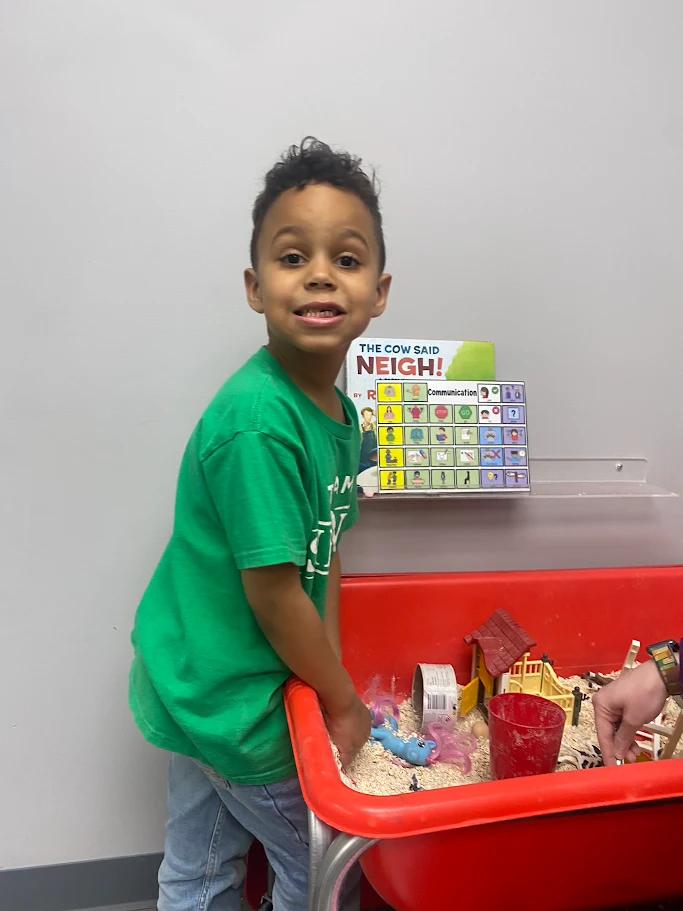
Like many kids with verbal language delays, Korbyn was communicating—but his methods of communication were not always understood by those around him. His speech therapist and parents teamed up to recognize and honor the communication he had in place, with the mindset of training communication—not just training speech. All the while, in speech therapy and at home, Korbyn was immersed in a language-rich environment and provided with frequent models of verbal communication that followed his interests and expanded on his own communication in simple, sequential steps.
Slowly but consistently, things began to change. Korbyn had more ways to communicate—both verbal and nonverbal—and his frustration began to decrease. Throughout his therapy journey, Korbyn’s parents were vital members of his team, and their commitment to working on his goals at home with his therapists’ recommendations was integral to his progress.
Ashley says that before Korbyn began therapy, she sometimes felt defeated because she was not sure how to help him. “Since we started at The Pediatric Place, being able to collaborate with Korbyn’s therapists has helped us at home tremendously,” she said.
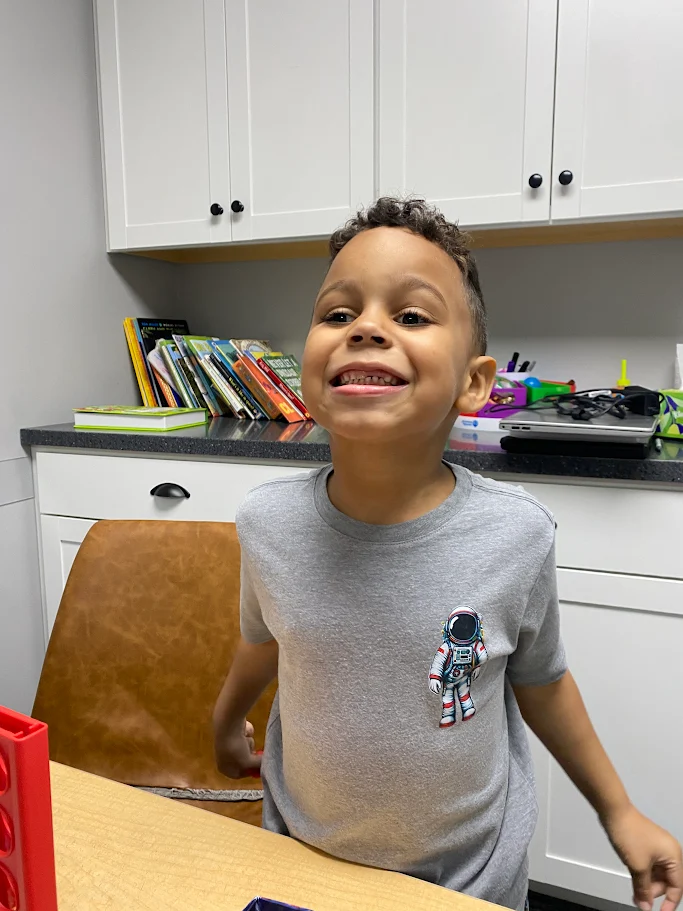
Now Korbyn is five years old, and all the hard work has paid off! At Korbyn’s most recent re-evaluation, he tested within average range for receptive and expressive language skills!
“Korbyn is able to express himself more with his peers in school and with us at
home, telling us when he is feeling a certain type of way,” Ashley said. “If he is frustrated or
angry he will tell us just that and then we work on fixing the problem. Korbyn has
grown so much and has become more social at school with his peers.”
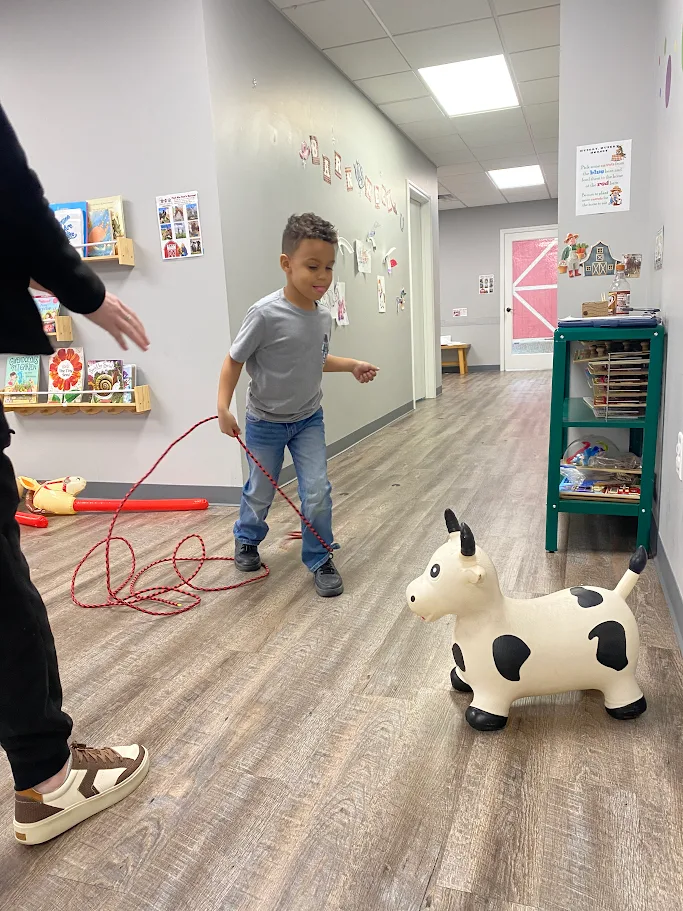
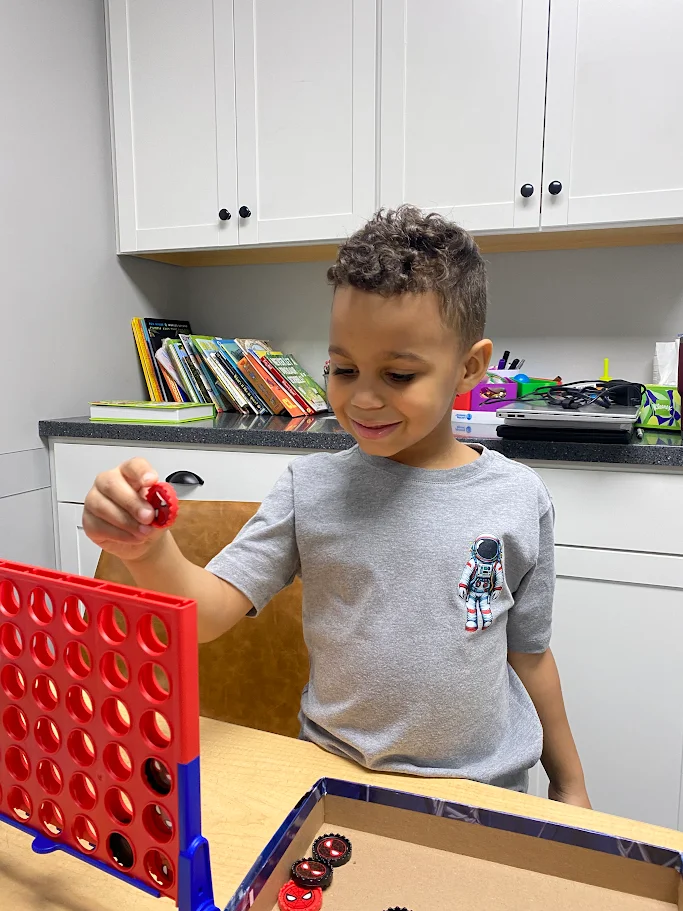
Korbyn is continuing to work hard in speech therapy, now targeting speech intelligibility and early literacy skills. Although his communication skills have reduced frustration reactions significantly, Korbyn continues to work on emotional regulation in occupational therapy.
“Korbyn is full of energy and keeps me literally on my toes with his competitive drive,” said TPP occupational therapist Nancy Gerding. “His motivation to be independent and his persistence in mastering new skills is something I can’t teach. We are focusing on the frustration and big feelings that sometimes result when he tries to tackle a challenging task. He is improving in maintaining regulation and finding safe ways to relieve his stress when he does become dysregulated.”
Ashley reports that they are still working on these goals at home with Nancy’s help, but that teachers have reported a lot of success. “Korbyn has fewer meltdowns at school and no
longer has to be removed from the class to calm down,” she said.
Korbyn’s progress has made a huge difference for him and his family. But Ashley remembers well what it was like to be at the beginning of the journey.
“I believe advocating for your child as a parent is the number one piece of advice I
would give to any paren—and don’t be scared to ask questions,” she said. “Take a deep
breath and use the resources you are given because it will help your child and you
as their parent in navigating life after their diagnosis.”
Are you concerned about your child’s speech and language development? We have immediate openings for speech therapy at both locations. Call us at 660-219-9176 (Clinton) or 660-219-9381 (Knob Noster) to schedule an evaluation.