
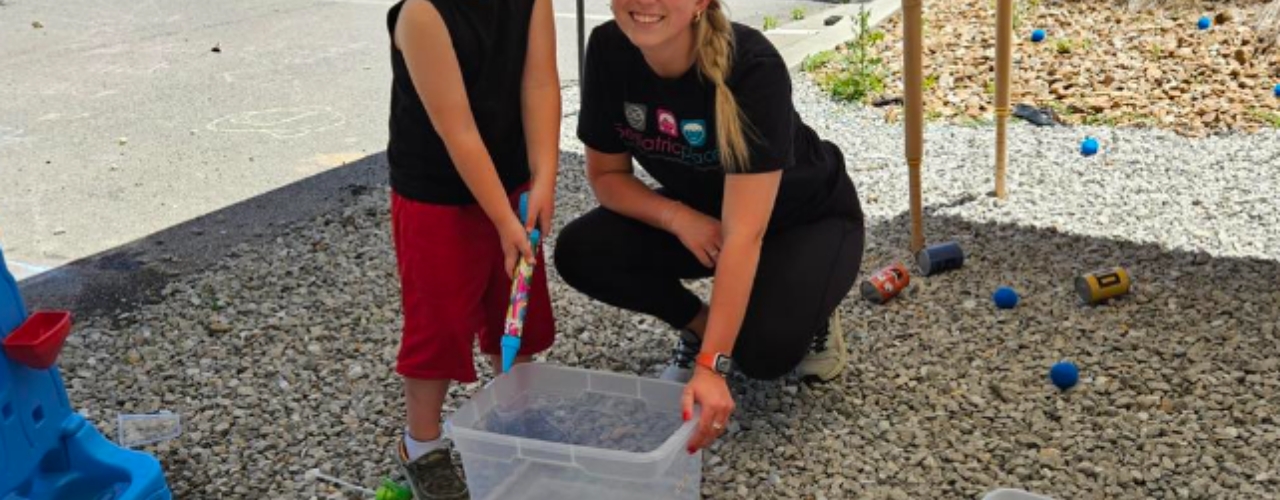
is your child struggling with sensory-motor integration skills
Discover How We Can Assist
As a parent, ensuring your child’s healthy development is likely your top priority. Developing sensory motor skills—how we perceive information through our senses and respond with appropriate motor actions—is a crucial part of your child’s growth.
We rely on sensory motor skills daily, whether it’s brushing our teeth or holding objects. If your child seems to have difficulties in this area, it’s natural to feel concerned or anxious.
The good news is that with the support of a pediatric occupational therapist at The Pediatric Place, your child’s sensory motor skills can improve in various ways.
At our Clinton and Knob Noster, MO clinics, we are dedicated to supporting your family and empowering your child with the skills they need to fully participate in and enjoy life. If you think your child could benefit from pediatric occupational therapy, contact The Pediatric Place today to schedule an appointment with one of our specialists.
what is sensory-motor integration disorder?
If your child has been recently diagnosed with a sensory-motor integration disorder, you might have many questions. What does this mean for my child? How will it affect them? And most importantly—how can I help?
If you’re feeling overwhelmed, don’t worry. Our experienced team is here to guide you and answer any questions you may have.
To understand sensory-motor integration disorders, it’s essential to know what sensory motor skills are. Sensory motor skills involve using our senses to gather information about the world and responding with the appropriate motor actions.
Sensory-motor integration disorder occurs when the brain has difficulty receiving and responding to information that comes through the senses, which affects movement and coordination. This dysfunction can interfere with a person’s ability to process sensory inputs and coordinate motor responses, leading to challenges with balance, movement, and overall body control.
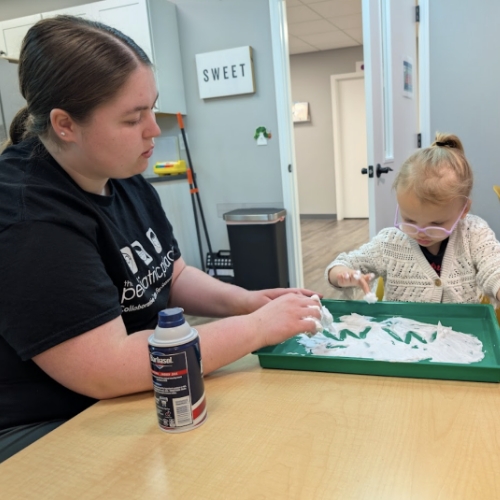
Sensory motor dysfunction is often associated with conditions like sensory processing disorder (SPD), developmental coordination disorder (DCD), and sometimes autism spectrum disorder (ASD).
For instance, if a bike is speeding toward you, you use your sensory motor skills to quickly move out of the way.
We use our vision, hearing, taste, touch, balance, and spatial awareness to process information about our surroundings.
If your child has a sensory-motor disorder, they may struggle with:
- Walking, sitting, or crawling
- Using toys or catching objects
- Dressing or brushing their teeth
- Writing, coloring, or drawing
- Participating in everyday activities
- Playing sports
Fortunately, the occupational therapists at The Pediatric Place are here to help your child enhance their sensory-motor integration skills and build independence.
How can occupational therapists at The Pediatric Place support my child?
Our skilled pediatric occupational therapists specialize in treating children with sensory-motor integration challenges and know the most effective therapies.
When you visit our Clinton or Knob Noster, MO clinics, a pediatric occupational therapist will evaluate your child through a variety of assessments. The assessment involves a comprehensive evaluation of how sensory inputs are processed and how they affect a child’s motor responses. During the evaluation, the occupational therapist will assess your child’s sensory processing skills, motor coordination, motor planning, postural control and balance, muscle tone and strength, bilateral coordination, eye-hand coordination (visual-motor integration), self-care skills, behavior responses to sensory input, and adaptive responses.
By examining sensory processing, motor coordination, balance, and daily functional skills, the OT can identify areas of difficulty and create a targeted intervention plan to support the child’s development and improve their ability to engage in everyday activities.
Sensory Processing
The OT assesses how well a child receives, interprets, and responds to sensory input from their environment. This includes evaluating responses to stimuli such as touch, movement, sight, sound, and body position (proprioception).
- Tactile processing: The OT observes the child’s response to different textures and touch. Is the child overly sensitive (avoiding touch or certain textures) or under-responsive (seeking out touch or appearing indifferent to it)?
- Vestibular processing: The OT looks at how the child responds to movement and balance activities, such as spinning, swinging, or walking on uneven surfaces. Children with vestibular processing issues may feel dizzy or unsteady or avoid movement altogether.
- Proprioceptive processing: The OT assesses the child’s ability to sense their body position and control their movements. The therapist may look at how the child navigates physical space, uses appropriate pressure when grasping objects, and coordinates movements.
- Auditory and visual processing: The OT may observe how the child responds to visual stimuli (like lights or tracking objects) and sounds (such as loud noises or music). Children may be hyper- or hypo-sensitive to these inputs.
Motor Coordination
The OT assesses how the child’s motor skills are impacted by sensory processing. This includes evaluating both fine and gross motor coordination.
- Fine motor skills: The OT evaluates the child’s ability to perform tasks that require small, precise movements, such as grasping, manipulating small objects (e.g., beads, buttons), cutting with scissors, or writing with a pencil.
- Gross motor skills: The OT assesses the child’s ability to perform larger movements, such as running, jumping, balancing, climbing, or navigating playground equipment. Coordination during activities like catching or throwing a ball is also observed.
Motor Planning (Praxis)
Motor planning, also known as praxis, is the ability to conceive, plan, and execute motor actions. Children with sensory motor integration disorders often struggle with dyspraxia (difficulty with motor planning), which the OT evaluates through various activities.
- Imitation and copying: The OT may ask the child to imitate actions, such as clapping hands, or to follow simple movement sequences like hopping or skipping.
- Novel tasks: The OT may introduce unfamiliar tasks or activities to see how well the child plans and executes the movements required to complete them.
- Sequencing movements: The OT evaluates how well the child can organize and execute multiple steps in the correct order, such as stringing beads or following a multi-step instruction (e.g., get a ball, throw it, and return).
Postural Control and Balance
Postural control and balance are critical for stability during movement. The OT assesses the child’s core strength, stability, and balance while performing various activities, such as:
- Sitting upright in a chair without slouching or leaning.
- Standing on one foot or balancing on a stability ball or balance beam.
- Performing activities that challenge dynamic balance, such as walking on uneven surfaces or hopping.
Muscle Tone and Strength
The OT assesses muscle tone and strength, as these factors influence a child’s ability to control movement. Children with sensory motor integration disorders may exhibit low muscle tone (hypotonia) or high muscle tone (hypertonia), which can affect movement and posture.
- Hypotonia: The OT evaluates whether the child appears floppy, tires easily, or has difficulty maintaining upright posture.
- Hypertonia: The OT looks for signs of excessive muscle tightness, rigidity, or difficulty in fluid movement.
Bilateral Coordination
Bilateral coordination refers to the ability to use both sides of the body in a coordinated way. The OT assesses the child’s ability to perform tasks that require two-handed or two-sided coordination, such as:
- Catching or throwing a ball using both hands.
- Cutting with scissors (requiring one hand to hold the paper while the other cuts).
- Climbing or performing tasks that involve cross-lateral movements (e.g., crawling, where one hand moves with the opposite leg).
Eye-Hand Coordination (Visual-Motor Integration)
Visual-motor integration is the ability to coordinate visual input with motor output, a key component of many daily tasks. The OT assesses the child’s ability to perform tasks such as:
- Drawing, tracing, or copying shapes.
- Catching or hitting a moving object.
- Completing puzzles or mazes that require precise eye-hand coordination.
Self-Care Skills
The OT assesses how sensory and motor challenges affect the child’s ability to perform daily living tasks, such as:
- Dressing (zipping, buttoning, tying shoelaces).
- Feeding (holding utensils, drinking from a cup without spilling).
- Grooming tasks like brushing teeth or hair.
Behavioral Responses to Sensory Input
Children with sensory motor integration issues often have distinct behavioral responses to sensory stimuli, which the OT will observe. This can include:
- Sensory seeking behaviors: Some children may seek out sensory input, such as crashing into objects, spinning, or seeking strong pressure through tight hugs or heavy lifting.
- Sensory avoidance: Other children may avoid sensory input, showing distress or withdrawing from certain textures, sounds, or movements.
- Emotional regulation: The OT evaluates how well the child can regulate emotions and behavior when faced with overwhelming sensory inputs. Children may become easily frustrated, anxious, or dysregulated in response to certain stimuli.
Adaptive Responses
The OT looks at how the child adapts to new sensory or motor challenges. For example:
- Does the child respond to sensory input appropriately?
- Can the child adjust their body movements based on environmental feedback, such as stepping over obstacles or catching themselves when they begin to lose balance?
After the evaluation, you’ll receive a comprehensive report outlining findings and recommendations. The therapist will also meet with you to discuss the results, answer questions, and explain what therapy might involve if recommended.
Your child’s treatment plan will be designed to address specific sensory and motor deficits, promote better processing of sensory information, and improve their motor coordination.
At The Pediatric Place, our pediatric occupational therapists develop individualized treatment plans and often involve a combination of therapies, strategies, and activities aimed at improving daily functioning, emotional regulation, and overall quality of life.
You may also be asked to assist your child in therapy. Our pediatric OTs equip parents and caregivers with the knowledge and tools to support the child’s sensory-motor needs at home and in daily life.
- Sensory diet at home: Teaching caregivers how to incorporate sensory activities into the child’s daily routine to support self-regulation.
- Behavioral strategies: Training on how to handle meltdowns, transitions, or sensory overload situations.
- Collaborative goal setting: Working with parents to set realistic, achievable goals for the child based on their strengths and challenges.
Examples of activities that might be included in your child’s treatment plan are:
Sensory diet
A tailored plan of sensory activities that the child engages in throughout the day to regulate their sensory system. These activities might include:
- Swinging or spinning (vestibular input).
- Jumping on a trampoline or heavy lifting (proprioceptive input).
- Play with different textures (tactile input).
- Visual stimulation games, like catching bubbles or following moving objects.
Deep pressure activities
Using weighted vests, blankets, or compression garments to help the child feel more grounded and calm.
Balance and movement activities
Encouraging movement through obstacle courses, balancing on a stability ball, or using balance beams to improve vestibular processing.
Tactile play
Incorporating sensory bins, play dough, finger painting, and other textured materials to help desensitize or engage the child’s tactile system.
Fine motor activities
Activities that involve using the hands and fingers in a coordinated way, such as:
- Cutting with scissors.
- Stringing beads or placing small objects in containers.
- Practicing handwriting or drawing to enhance visual-motor coordination.
- Building with blocks or Lego sets to improve dexterity.
Bilateral coordination tasks
Activities that require using both sides of the body together, such as:
- Jumping jacks.
- Throwing and catching with two hands.
- Playing on playground equipment (monkey bars, ladders).
Core strengthening exercises
Activities that engage the abdominal and back muscles to improve overall stability, such as:
- Plank exercises or yoga poses.
- Rolling on an exercise ball or holding balance positions.
- Wheelbarrow walking or crab walking to improve upper body strength.
Posture-focused activities
Encouraging activities that improve sitting balance, such as sitting on a therapy ball during tasks, or practicing maintaining an upright position during fine motor work.
Obstacle courses
Designed to require the child to navigate various motor challenges, such as climbing, crawling, jumping, and balancing. The complexity can be adjusted to challenge motor planning abilities.
Multi-step tasks
Activities that involve multiple steps in sequence, such as setting up a game, preparing a snack, or completing a puzzle.
Imitation games
Playing “Simon Says” or copying movements in a mirror to enhance the child’s ability to imitate and sequence actions.
Calming strategies
Teaching the child coping strategies to calm down when overstimulated, such as:
- Deep breathing exercises.
- Using calming sensory tools like fidget toys, stress balls, or weighted blankets.
- Engaging in repetitive or rhythmic activities, like rocking or swinging, to self-regulate.
Routine-building
Creating consistent routines that help the child anticipate sensory inputs and transitions, reducing anxiety and meltdowns.
Emotional regulation strategies
Encouraging activities that promote emotional awareness and control, such as labeling emotions, using social stories, or implementing visual schedules to manage transitions.
Classroom adjustments
Providing sensory breaks, fidget tools, or a quiet corner for the child in school.
Home modifications
Creating sensory-friendly spaces at home with access to calming tools (like a quiet room, dim lighting, or sensory bins) to help the child regulate when overwhelmed.
Adaptive equipment
Introducing tools like chewable jewelry for oral sensory needs, noise-canceling headphones, or wobble cushions for sitting to help with focus and sensory regulation.
Set your child up for success
contact The Pediatric Place today!
If you’ve noticed your child struggling with sensory-motor integration skills, our team of pediatric occupational therapists is dedicated to providing the support they need. Contact our Clinton or Knob Noster, MO clinics today to schedule an appointment with one of our caring professionals.
We look forward to helping your family.
Your Next Steps…
Request An Appointment
Meet Our Multidisciplinary Team
Receive a Seamless Treatment Plan
Start to See Success and Growth!