
How can occupational therapy help?
Occupational therapists (OTs) play a vital role in helping children develop handwriting skills, especially if they are struggling due to fine motor delays, sensory processing issues, or other challenges. OTs implement a plan to build up the foundational skills for fine motor development.
Strengthening Hand Muscles
OTs work on strengthening the small muscles in the hands and fingers that are essential for controlling a pencil. This might include exercises like squeezing putty, using hand grippers, or playing with small objects that require pinching or manipulating.
Improving Fine Motor Skills
Activities like threading beads, using tweezers to pick up small objects, or playing with puzzles help enhance fine motor coordination, which is crucial for precise handwriting.
Developing Finger Dexterity
Tasks that promote finger isolation and dexterity, such as finger tapping games, finger puppets, or playing musical instruments, are used to improve control over pencil movements.
Correcting Pencil Grip
OTs often teach children the proper pencil grasp, such as the tripod grip, which promotes better control and reduces hand fatigue. They may use adaptive equipment like pencil grips or special pencils to support correct hand positioning.
Posture and Seating
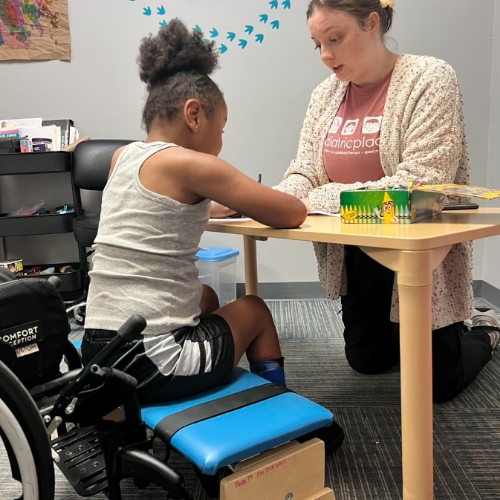
Proper posture is essential for effective handwriting. OTs may work with the child to ensure they are sitting with proper back support, feet flat on the floor, and arms at the right height to comfortably write.
Improving Hand-Eye Coordination
Activities that require coordination between visual input and hand movements, such as tracing shapes, copying patterns, or connecting dots, help improve the child’s ability to form letters accurately.
Letter Formation Practice
OTs often use structured handwriting programs (e.g., Handwriting Without Tears, Zaner-Bloser) that break down letter formation into manageable steps, helping children practice forming letters correctly.
Addressing Sensory Issues
If the child has sensory processing difficulties, OTs may incorporate sensory-based interventions, such as using textured surfaces, vibration, or weighted pencils, to help the child become more comfortable with the writing process.
Sensory Breaks
For children who are easily overwhelmed or distracted, OTs might recommend sensory breaks or activities to help the child stay focused and calm during writing tasks.
Fun and Interactive Games
OTs often incorporate fun activities like drawing, doodling, or playing writing games to keep the child engaged and motivated. These activities help reinforce the skills needed for handwriting without making it feel like a chore.
Creative Writing Exercises
Encouraging the child to write stories, keep a journal, or create lists can make handwriting practice more meaningful and enjoyable.
Assistive Technology
For children with significant handwriting difficulties, OTs may introduce assistive technology, such as keyboarding or speech-to-text tools, to support written communication while continuing to work on handwriting skills.
Your Next Steps…
Request An Appointment
Meet Our Multidisciplinary Team
Receive a Seamless Treatment Plan
Start to See Success and Growth!