Physical Therapy Spotlight: Experts in Torticollis Intervention

Written By: Amy Wolcott M.S., CCC-SLP
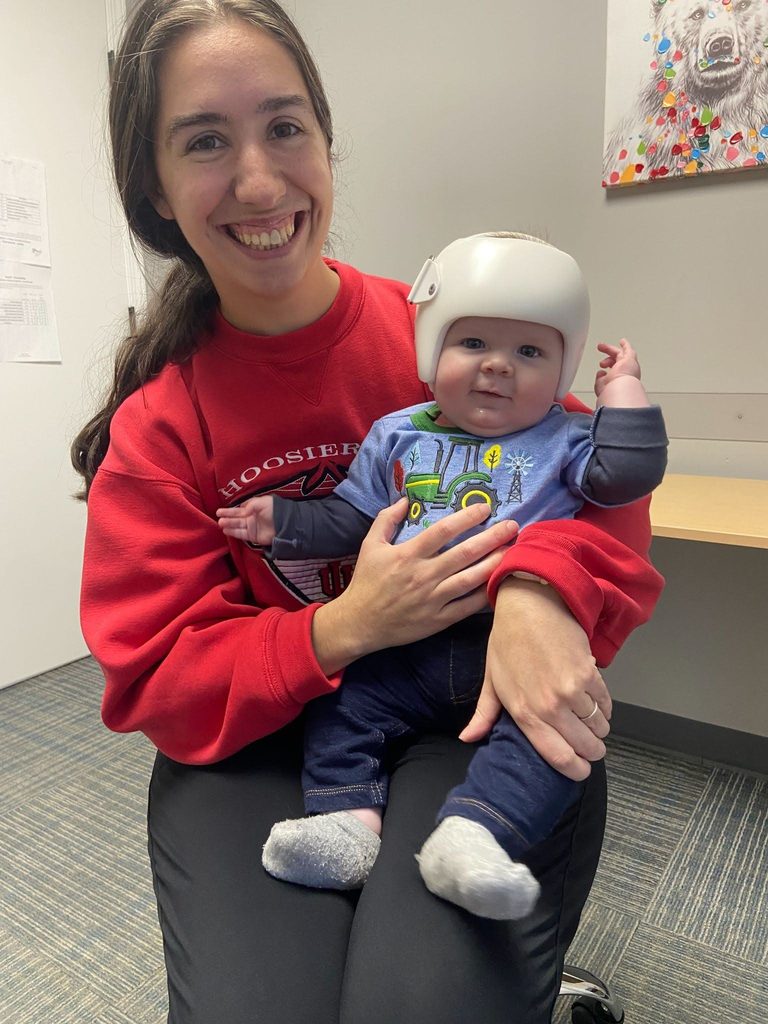
At The Pediatric Place, our physical therapists love working with babies. Who wouldn’t want to cuddle with babies as part of their job? Every day, they have the joy of helping babies crawl, roll over, sit up, stand, and walk. Another reason they frequently see our youngest clients is torticollis.
What Is Torticollis?
The name torticollis comes from the Latin words “tortus” (twisted) and “collum” (neck). Torticollis is a condition which causes an infant’s neck to bend to one side and their head or chin to rotate to the other side. Torticollis may be congenital (present at birth) or acquired (developed later in infancy or childhood).
What Are Symptoms of Torticollis?
In addition to the head tilt described above, symptoms of torticollis may include:
- Limited movement of the head and neck, which may cause feeding difficulties
- Uneven shoulders
- Tightness, stiffness, or swelling of neck muscles
- Uneven facial features
- Neck pain or headaches
- Flat spot on head (plagiocephaly) from turning to one side too often
What Causes Torticollis?
Congenital torticollis is often due to the shortening of the sternocleidomastoid muscle on one side of the baby’s neck. This may happen as a result of:
- Intrauterine positioning
- Birth trauma
- Abnormal muscular or skeletal development
- Acquired torticollis may result from swelling in the child’s throat. Causes might include:
- Infection
- Injury
- Gastroesophageal reflux (GERD)
- Vision problems
What Can You Do To Help?
1.Don’t delay.
If you have concerns about torticollis, talk to your pediatrician about a physical therapy referral right away.
“Torticollis and plagiocephaly can lead to jaw misalignment and overall face asymmetry when left untreated,” warns TPP physical therapist and co-owner Jessi Frencken.
The sooner your child is seen, the better the results of treatment will be.
2. Limit time in strollers, swings, car seats, etc.
Limit time in car seats and strollers to only the time your baby is being transported, and minimize the time they spend in other “containers,” such as swings. When your baby is in these devices, center their head. Hold your baby, use a sling, and allow your baby to play in a playpen or on a blanket with supervision whenever possible.
3. Increase tummy time.
Supervised tummy time at least three times per day is important for your baby’s development. Put interesting toys on both sides of your baby to encourage them to look both ways.
4. Pay attention to sleep positioning.
Your baby should always sleep on their back, but turn their head to the opposite side each night to prevent plagiocephaly.
5. Be consistent with home stretches.
Your baby’s physical therapist will prescribe a home exercise program to optimize head and neck positioning.
“I tell parents that consistency is key,” Jessi explained. “It is the frequency with which they are completing stretches and positional changes that makes the difference rather than the length of time per stretch or movement.”
TPP physical therapist Grace Schibi agrees. “I emphasize that most of the work will come from the parents staying consistent with the home exercise program each week,” she said. “Inconsistent home program compliance can lead to asymmetry and delays in gross motor milestones.”
Do you think your baby may have torticollis? Speak to your pediatrician today about a physical therapy referral.
Are you a pediatric physical therapist or physical therapist assistant? We would love to talk to you about joining our team! At TPP, you will have the opportunity to make a difference in the lives of children in our area while working in a supportive, multi-disciplinary environment. Learn more about job opportunities on our careers page!
Sources:
- “Congenital Muscular Torticollis.” Academy of Pediatric Physical Therapy. https://pediatricapta.org/clinical-practice-guidelines/Congenital-Muscular-Torticollis.cfm
- “Torticollis.” Cleveland Clinic, 28 Feb., 2022, https://my.clevelandclinic.org/health/diseases/22430-torticollis