
To Shoe or Not To Shoe?
As a pediatric physical therapist, one question I face a lot is, “Should my toddler wear shoes or not?”.
This is actually a loaded question. My standard answer is, “That completely depends on your toddler.”
Here’s how you can determine the correct amount of shoe-wearing for your child.
How is my child’s foot developing?
The muscles in the bottom of the feet are designed to strengthen over time as a toddler learns to stand and take steps. Each time they scrunch their toes to gain balance, they are actively contracting the muscles in their feet to build arches along the midfoot. As these arches develop and grow stronger over time, we begin to see a slight rise in the middle of the foot and the heel moves from an outward-turned position to a more neutral position. This elevated arch and well-placed heel provides stability to the ankle, knee, and even up into the hip. This enables kids to get stronger overall and improves balance for all kinds of dynamic movements such as running, jumping, hopping, and skipping.
But what happens when those arches don’t develop properly?
If a kiddo is delayed in standing and they aren’t able to practice those toe-scrunching, feet-strengthening exercises or they have a muscle or tone disorder that doesn’t allow their muscles to contract appropriately or completely, these arches often fail to fully form. This causes a decreased ability to balance, which reduces the opportunity to practice, which leads to further poor strength and balance, and the vicious cycle continues.
So…to shoe or not to shoe?
Shoes are designed to protect feet but can also provide external support when anatomical support isn’t sufficient.
If your child is typically developing and arches are forming appropriately as they learn to stand and walk, we recommend you keep shoes on their feet about 50% of the time. This gives their feet time to practice strengthening without shoes and have sensory experiences beneficial for their brain, but also provides ample time to become acclimated to the sensation of shoes and practice navigating terrains that wouldn’t otherwise be safe without shoes.
However, let’s say your kiddo’s arches aren’t developing the way we would like or they exhibit a delay in standing or walking. In this case, we recommend wearing good, supportive shoes for 75-80% of their waking hours.
What kind of shoes should I buy?
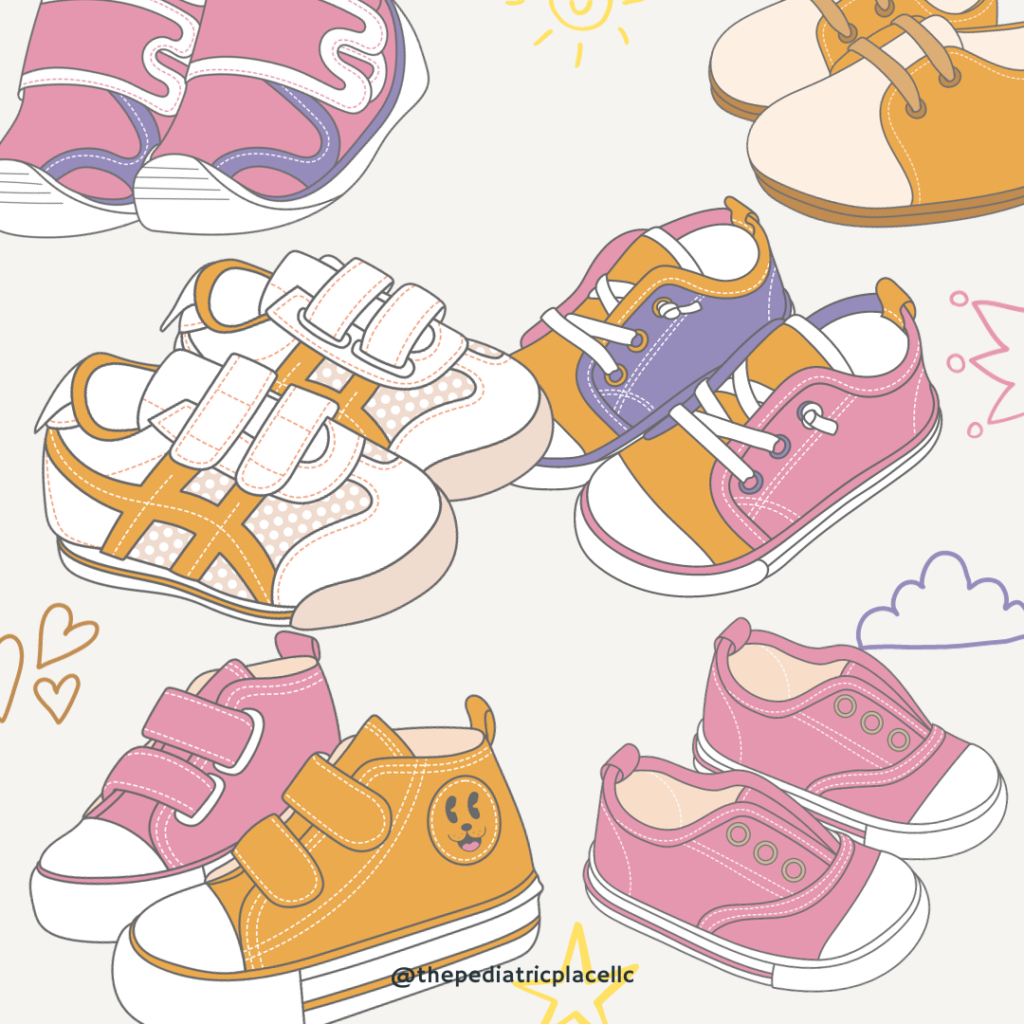
When purchasing new shoes, look at three things:
- Squeeze the toe box and heel box to check for firmness. You want a shoe that is firm.
- Twist the shoe and look for movement. You want a shoe that has less movement.
- Look inside the shoe for a raised arch support. This is not a deal breaker on a shoe, as many youth shoes do not have good arch supports. If deciding between two pairs, pick the one that has better arch support.
Ultimately, if you have questions or concerns about your kiddo’s feet, call our Clinton (660-885-2394) or Knob Noster (660-687-0187) clinic and let one of our physical therapists offer their specific recommendations for your kiddo.
By Jessi Frencken, MPT