What is AAC? Communication for Everyone
What Is AAC?
Have you ever held up your hand to signal someone to stop? Written a note or sent a text? If so, you’ve used AAC!
AAC stands for Augmentative and Alternative Communication, and it includes any means of communication besides talking! AAC may be used to supplement (augment) or take the place of (alternative) verbal communication.
Forms of AAC range from no-tech (e.g., sign language) to high-tech (e.g., speech generating devices).

Low-Tech AAC
- Writing
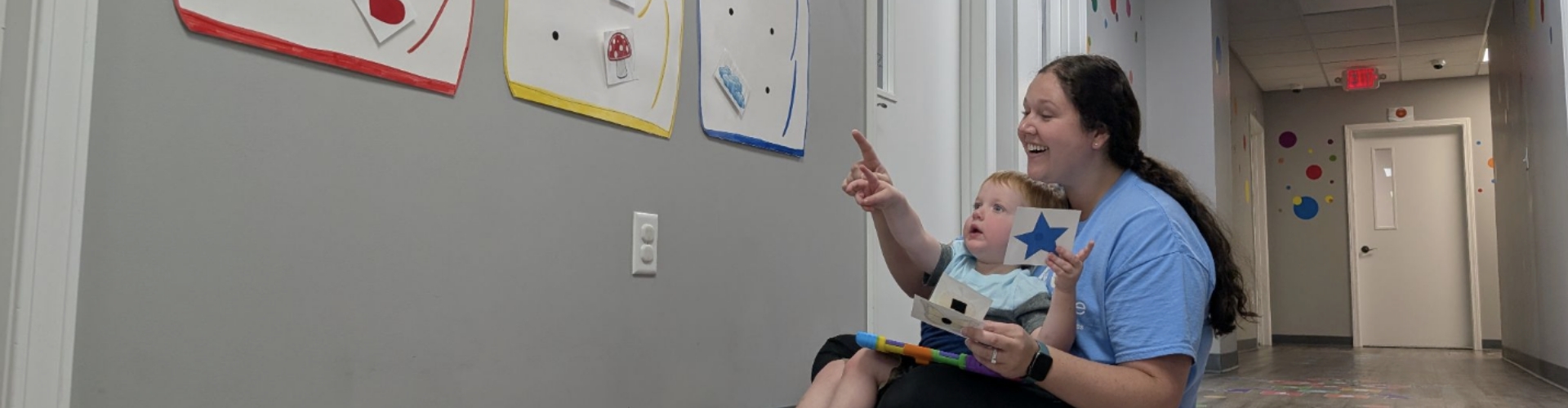
- Communication boards
- Visual schedules
- Picture Exchange Communication System
Mid-Tech AAC
- Single voice output switch
- Static display with voice overlay
High-Tech AAC
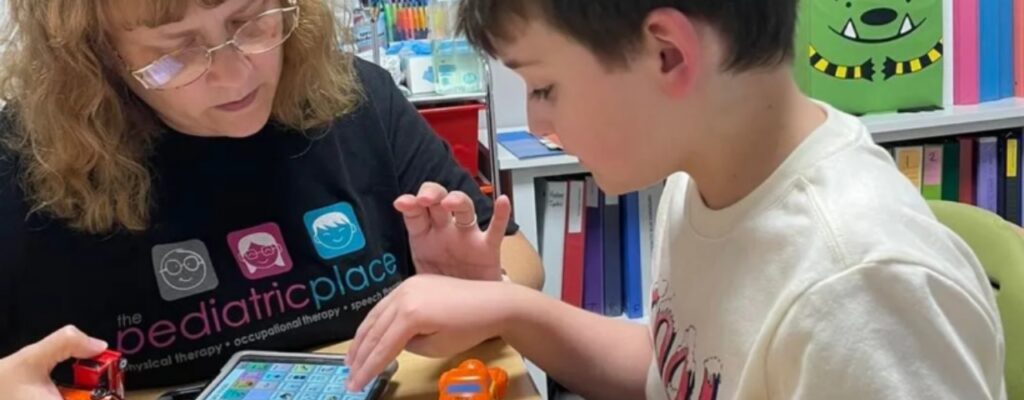
- Speech generating device
Who Uses AAC?
AAC can benefit anyone who has trouble communicating verbally due to language, sensory, or speech motor difficulties, including:
- Autism
- Cerebral palsy
- Muscular dystrophy
- Stroke
- Traumatic brain injury
- Hearing loss
- Parkinson’s disease
- ALS
- And much more!
Does AAC hinder verbal language acquisition?
No! In fact, research indicates that AAC intervention may result in gains in speech production (Millar, Light, & Schlosser, 2006). When an individual is given an effective means of communication, vocabulary, grammar, and social language skills often increase!
Is it best to stick to one primary mode of communication?
At TPP our primary goal is creating effective communicators, not just eloquent speakers or proficient AAC users. If a child who primarily uses AAC requests a snack verbally or points to select a toy, that communication should be honored. Similarly, a child may benefit from supplementing verbal communication with sign or Picture Exchange Symbols. AAC is about maximizing communication potential, never limiting it!
Are there cognitive or motor prerequisites for AAC?
No! Our team of speech, occupational, and physical therapists work with each individual to identify the communication system that meets their personal, environmental, and physical needs. Everyone deserves a voice!
How should I communicate with an AAC user?
Just like you would talk to someone who uses verbal speech! AAC users love to communicate and build relationships just like you do. Be patient and willing to learn. AAC-based communicators learn language the same way speakers do: by learning from and imitating the speakers around them. It is important for familiar adults and communication partners to model communication for the language learner using the AAC system in addition to verbal speech (Binger & Light, 2009).

How can I learn more?
For information about AAC evaluation and intervention services at The Pediatric Place, call our Knob Noster clinic at (660-687-0187) or our Clinton clinic at (660-885-2394).
Binger, C. & Light, J.C. (2007). The effect of aided AAC modeling on the expression of multi-symbol messages by preschoolers who use AAC. Augmentative and Alternative Communication, 23:1, 30-43.
Millar, D.C., Light J.C., & Schlosser, R.W. (2006). The impact of augmentative and alternative communication intervention on the speech production of individuals with developmental disabilities: A research review. J Speech Lang Hear Res, 49(2):248-64.
By Amy Wolcott, M.S. CCC-SLP