
Therapy Spotlight: The Importance of Pre- and Post-Frenectomy Care
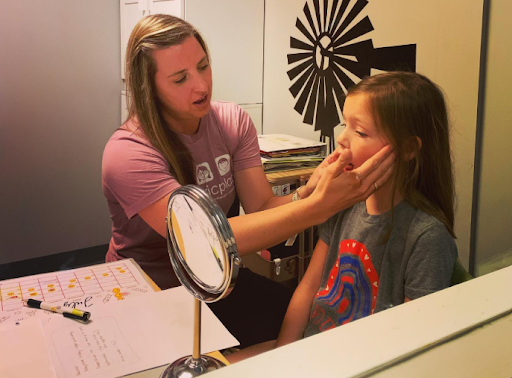
At The Pediatric Place, our team of experts is equipped to provide comprehensive pediatric therapy services. Members of our speech-language pathology team have completed intensive training in the field of orofacial myology, which addresses the function of the muscles of the face and mouth in relation to speech, feeding, and swallowing. One service these specialists provide is pre- and post-operative care for children receiving frenectomies.
What Is a Frenectomy?
Frenula are small pieces of tissue that connect two body parts. In the mouth, the labial frenula connects the upper and lower lips to the gums, and the lingual frenulum connects the tongue to the base of the mouth. In some people, this tissue is excessively tight or restricted, a condition commonly referred to as tongue or lip tie. Restricted frenula may result in difficulty with feeding and swallowing, speech, airway function, and even alignment of the teeth. When this is the case, an ENT or oral surgeon will remove the excess tissue to restore range of motion and improve function.
Who Needs a Frenectomy?
Your child’s speech-language pathologist is trained to recognize when structural issues may be contributing to feeding or speech concerns. Signs might include difficulty latching to breastfeed, excessive drooling or difficulty controlling saliva, swallowing concerns, and certain speech errors, including lisps and difficulty producing velar consonants. If your speech-language pathologist is concerned that a restricted frenulum may be impacting speech or feeding function, you will be referred to an ENT specialist for further evaluation.
Why Is Pre- and Post-Frenectomy Therapy Necessary?
If someone has surgery on their knee or elbow, they will visit a physical therapist to ensure proper healing and function. Speech-language pathologists who specialize in orofacial myology are like physical therapists for the mouth! Proper pre- and post-frenectomy care is necessary to ensure that:
- Oral muscles regain proper function. Because restricted frenula reduce the tongue and lips’ range of motion, certain oral muscles necessary for speech and swallowing may display weakness from lack of use. Additionally, therapy will support correct lingual placement in the oral cavity, which impacts swallowing safety, airway function, dental alignment, and speech sound development. Your plan of care will help your child achieve maximum function.
- Tissue reattachment does not occur. Following a frenectomy, there is a risk that tissue will reattach. Your post-operative plan of care will help ensure proper healing.
- Feeding or speech concerns are resolved. Following healing and rehabilitation, your speech-language pathologist will work with your child to resolve speech and feeding concerns!
What Will the Therapy Plan Look Like?
Your child’s therapy plan will be specially designed to address their individual speech and feeding concerns! During therapy sessions, they will participate in fun, age-appropriate exercises and activities designed to build strength and maximize function. Additionally, your therapist will provide training and recommendations to help you build success at home!
Do you have feeding, swallowing, or speech concerns? Call our Clinton office at 660-219-9176 or our Knob Noster office at 660-219-9381 to schedule an evaluation for your child.
By Amy Wolcott, M.S. CCC-SLP