
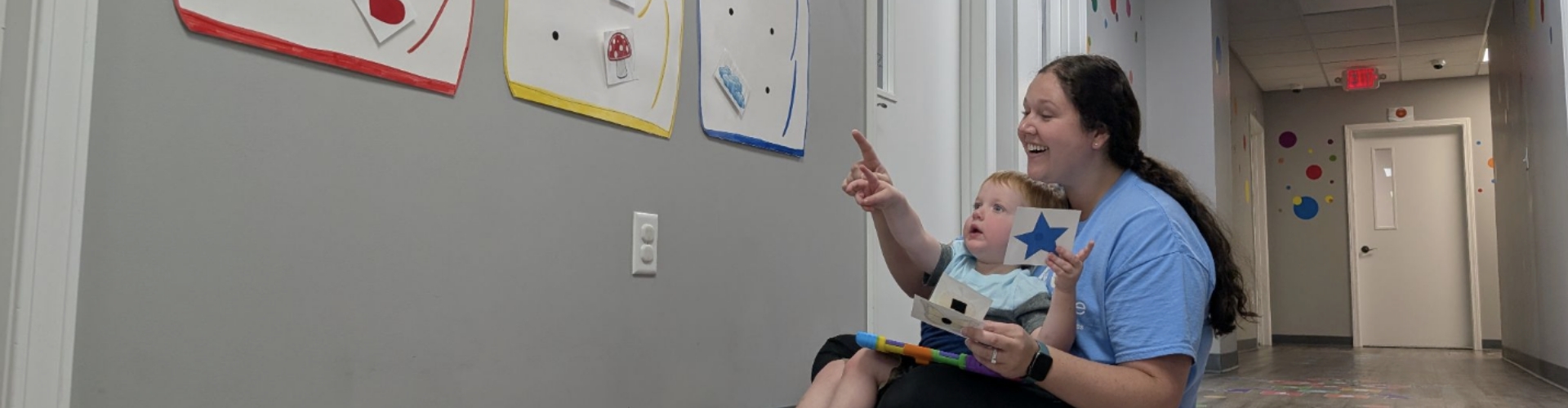
Orofacial Myology Experts at TPP
Providing Collaborative Care for Successful Futures
When The Pediatric Place co-owner and speech-language pathologist Carmen Rathert’s son was two years old, she noticed that he was having difficulty drinking from an open cup and using his jaw to extract liquid from a straw. Her journey to help him reach these milestones led her to a myofunctional therapist who diagnosed him with tongue thrust, an orofacial myofunctional disorder characterized by a forward position of the tongue during rest and a thrust against or between the teeth during swallowing and speech. Fascinated by the results her son achieved through this therapy approach, Carmen began her own journey to become a certified orofacial myologist.
What Is Orofacial Myology?
Orofacial myology is the study of the oral and facial muscles and their function in tasks such as speaking and swallowing. As Carmen expanded her study in this field, she found herself equipped with new strategies to improve outcomes for children on her speech and swallowing caseloads.
When speech therapist Amanda Littrell started working with Carmen, she began to see how muscle strength and coordination impact how a child produces speech sounds. Encouraged by the positive results her patients were achieving, Amanda too decided to further her studies within this specialty.
“I was seeing the need for myofunctional work with most of my caseload, and wanted to ensure that they were getting the best care that I could provide,” Amanda explained.
Who Benefits from Myofunctional Therapy?
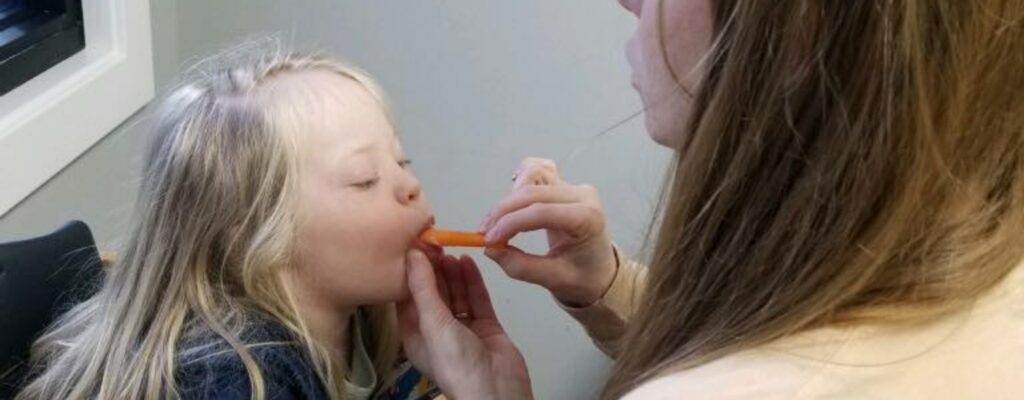
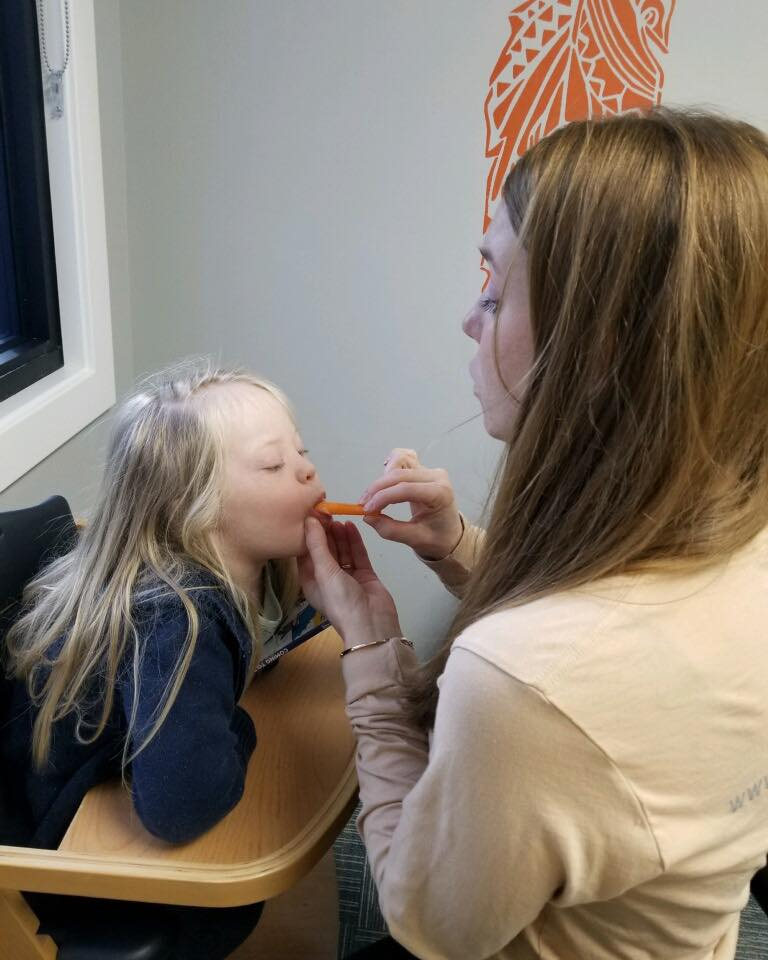
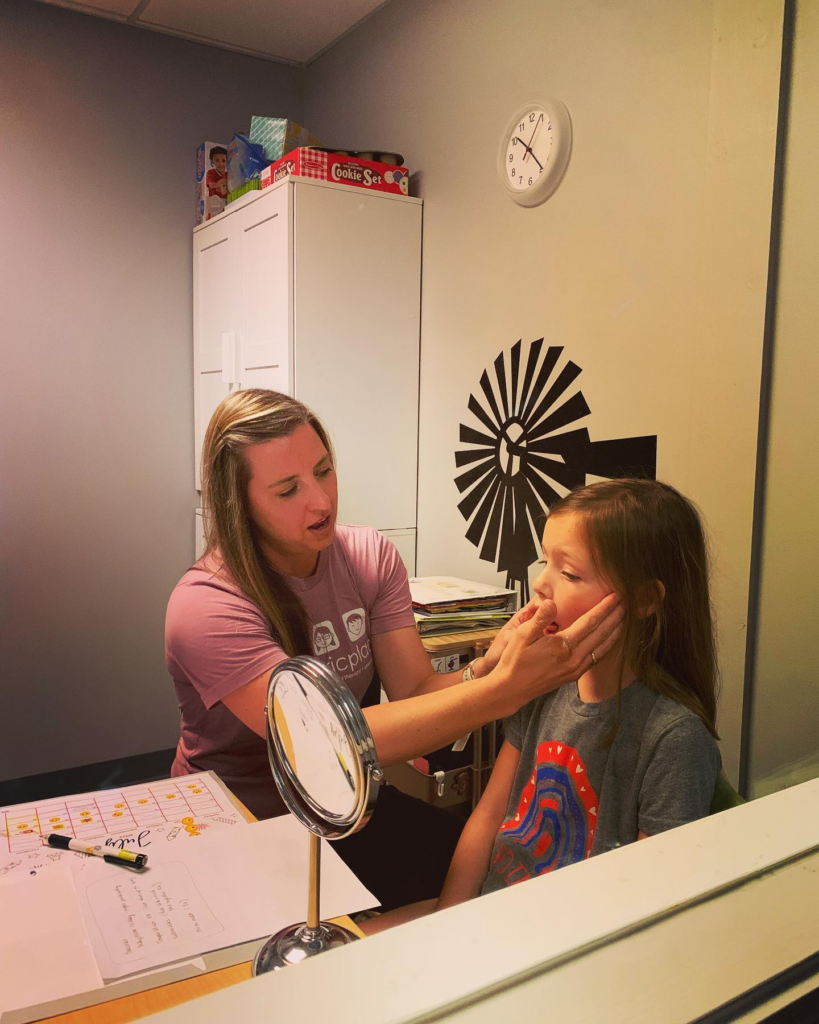
“Myofunctional therapy looks at the structure and function of the muscles of the mouth and face,” Amanda said. “We assess the soft tissue, muscle tension, range of motion, and coordination during our assessments.”
This approach enables therapists to achieve positive outcomes for a variety of conditions related to the function of the oral and facial musculature.
“Children with prolonged /s/, /z/, and /r/ articulation errors past the age of 9 or 10 who have not responded well to traditional speech therapy techniques are a key demographic who would benefit from a myofunctional evaluation,” Carmen explained.
Other signs of orofacial myofunctional disorders include mouth breathing, snoring, enlarged tonsils/adenoids, bags under the eyes, tongue or lip tie, picky eating habits, finger or thumb sucking, excessive gagging, difficulty chewing (swallowing food whole and/or chewing for too long), difficulty drinking from a cup or straw, and obtaining daily calories primarily through liquid consumption.
In infants, concerns include difficulty latching on the breast or bottle, munching on bottle nipples, excessive “snack nursing,” or seeming to never be full or fully satisfied following feedings.
The benefits of myofunctional therapy are not limited to young children, however.
“I evaluated an 18 year old who presented with mouth breathing as her primary complaint,” Amanda stated.
Due to difficulty breathing through her nose, this patient had adapted the way she breathes, opening her mouth for adequate breath intake and causing displacement of the jaw and tongue. She underwent surgery to address airway blockage and tongue/lip tie and completed her myofunctional therapy plan.
“At discharge she commented that she didn’t realize how hard it was for her to breathe prior to her treatment,” Amanda said. “She felt more rested, and while she didn’t come in with a feeding complaint initially, she stated it was easier to eat following her treatment plan.”
“We are the ‘physical’ therapists of the mouth and face,” Carmen expanded. “I always tell people that if you have pain in your knee you will adjust the way you walk to alleviate the pain only to find that you now have hip pain as you’ve changed the way you walk. The same principles apply to compensations made related to oral and facial structures.”
Why TPP Is The Place for Collaborative Care
Members of TPP’s speech therapy staff at our Clinton and Knob Noster locations have completed extensive orofacial myofunctional training consisting of 40+ hours of post-graduate instruction, enabling us to provide comprehensive therapy plans that address the root issues of speech and swallowing disorders related to muscle function and improve patient outcomes.
“Orofacial myofunctional training gave me a better understanding of facial musculature and the role of each piece in the disorders I treat,” said speech therapist and Knob Noster clinical manager Lauren O’Hare.
Our “whole child” approach to care is further supported by TPP’s wide range of pediatric therapy experts.
“I have often found that what happens in the mouth carries through the rest of the body,” Amanda explained. “If I feel tension through the mouth, I may refer to physical therapy for further assessment. If a child has guarded movements in the mouth, I may refer to occupational therapy for a complete sensory evaluation.”
Becoming the orofacial myology experts of West Central Missouri is one more way TPP provides collaborative care for successful futures.
By Amy Wolcott, M.S. CCC-SLP