AAC Services at TPP: Communication for Everyone!
At The Pediatric Place, we know that one size does not fit all when it comes to communication. Every voice is different, but every voice deserves to be heard! TPP is proud to provide expert AAC services to our community so every child can find their voice! Read on to learn more about AAC services and meet some of our AAC specialists!
What Is AAC?
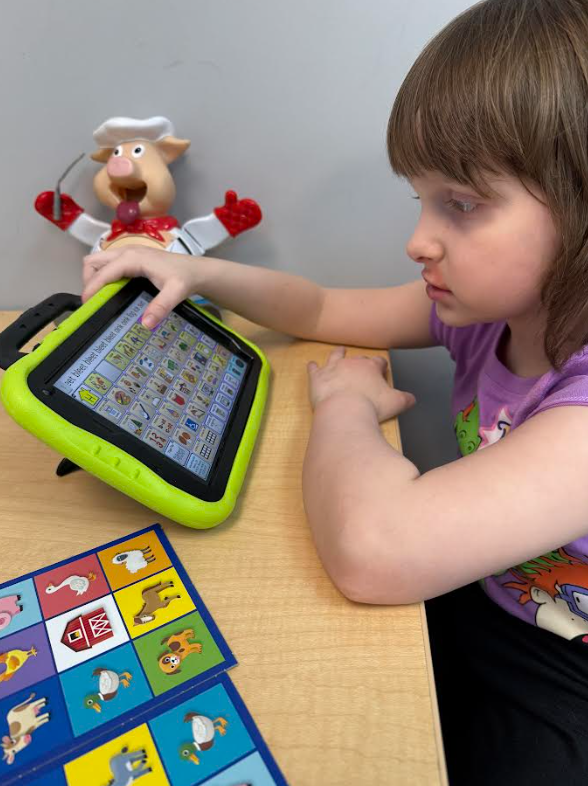
AAC stands for Augmentative and Alternative Communication, and it includes any means of communication besides talking! AAC may be used to supplement (augment) or take the place of (alternative) verbal communication. Forms of AAC range from no-tech (e.g., sign language) to high-tech (e.g., speech generating devices).
Who Uses AAC?
AAC can benefit anyone who has trouble communicating verbally due to language, sensory, or speech motor difficulties, including:
- Autism
- Cerebral palsy
- Muscular dystrophy
- Stroke
- Traumatic brain injury
- Hearing loss
- Parkinson’s disease
- ALS
- And much more!
Does AAC hinder verbal language acquisition?
No! In fact, research indicates that AAC intervention may result in gains in speech production. When an individual is given an effective means of communication, vocabulary, grammar, and social language skills often increase!
Is it best to stick to one primary mode of communication?
At TPP our primary goal is creating effective communicators, not just effective speakers or proficient AAC users. If a child who primarily uses AAC requests a snack verbally or points to select a toy, that communication should be honored. Similarly, a child may benefit from supplementing verbal communication with sign or Picture Exchange Symbols. AAC is about maximizing communication potential, never limiting it!
Are there cognitive or motor prerequisites for AAC?
No! Our team of speech, occupational, and physical therapists work with each individual to identify the communication system that meets their personal, environmental, and physical needs. Everyone deserves a voice!
What Do AAC services look like at TPP?
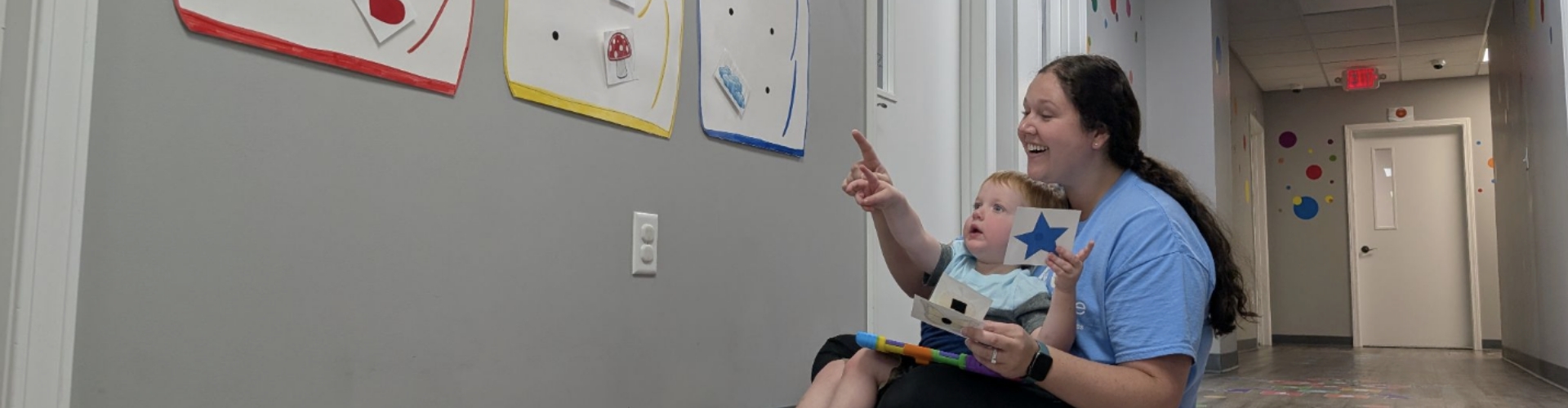
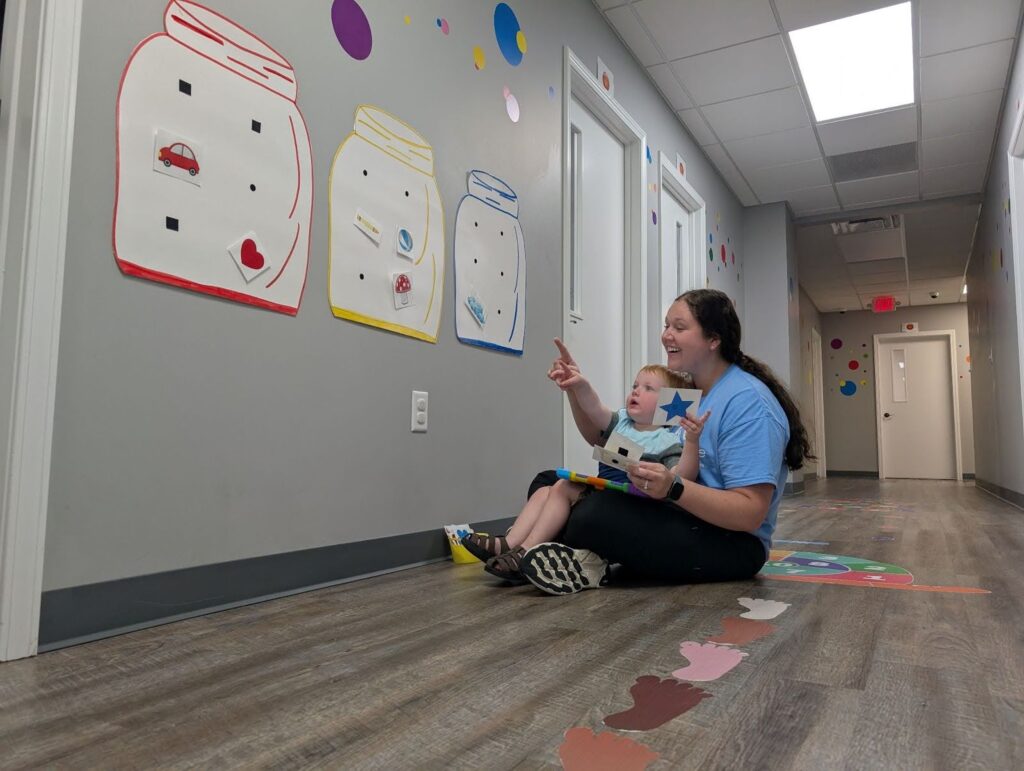
Our team of speech-language pathologists practice a play-based, total communication approach to language learning. It is our goal to identify the modes of communication that will be the most successful for each child; set goals that will support functional communication in home, academic, and social environments; and support each child and family as they work toward those goals.
I Think My Child May Benefit from AAC Services. What Are My Next Steps?
We are excited to offer comprehensive AAC evaluation services at both clinic locations! Our team will evaluate communication strengths and weaknesses, gross and fine motor skills, and sensory needs to identify the best communication system for your child! Call us to learn more at 660-219-9176 (Clinton) or 660-219-9381 (Knob Noster) to learn more.
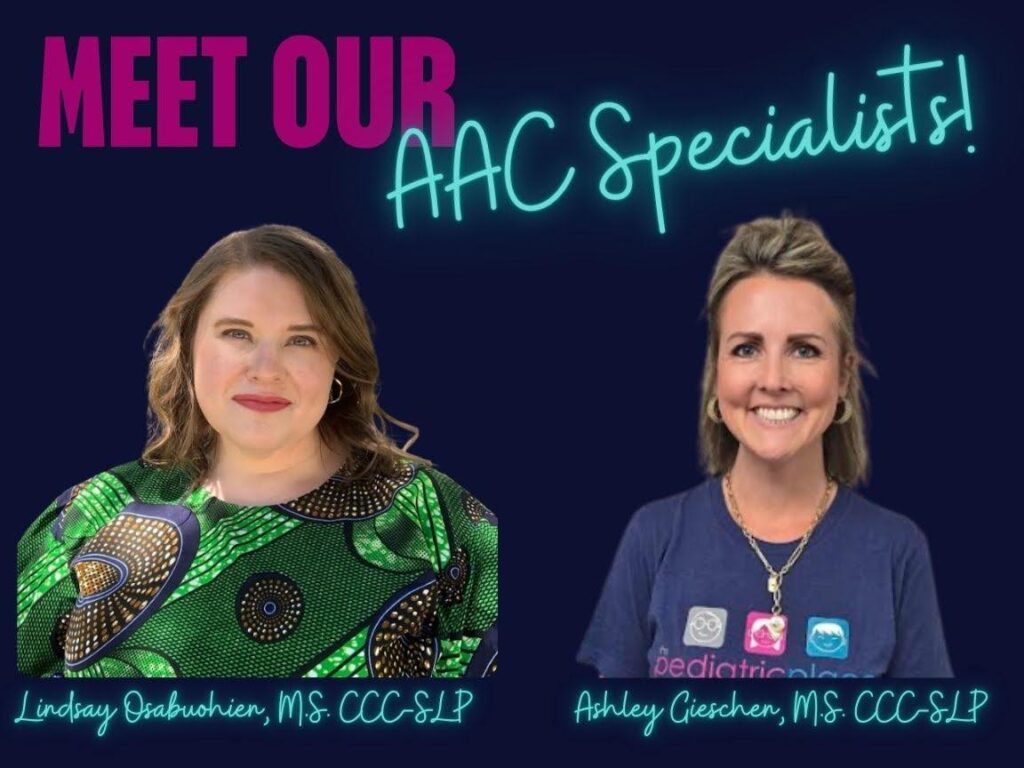
Meet our AAC Specialists!
Lindsay Osabuohien, M.S. CCC-SLP
Why are you passionate about working with AAC users?
I love watching the world open up for users of AAC. We can all probably think of a time that our desires or intentions have been misunderstood, which can give us empathy as we work with others who consistently struggle to convey their wants and ideas with conventional communication.
What is your AAC-related training and experience?
My training began at Portland State University, with Dr. Lynn Fox, who is a specialist in AAC and adult acquired language disorders. I completed my masters at the University of Washington and furthered my AAC training with Dr. Patricia Dowden, whose Continuum of Communication Independence is widely recognized and taught as a framework for understanding and supporting AAC users. I also worked with Dr. Nancy Brady’s Communication Complexity Scale at the University of Kansas, which is a tool to directly evaluate communication in individuals with complex communication needs.
Throughout my career I have received continuing education to further my expertise in various communication methods. I worked on a clinical trial research project at the University of Kansas, where we combined AAC with joint book reading, direct teaching of vocabulary, and play to treat school-aged children with autism and minimal verbal language skills. I also worked for Assistive Technology for Kansans, where we provided support, training, and information for acquiring a variety of AT equipment, including AAC. However, most of my experience has come from day-to-day interactions with AAC users, families, and community members. I’m grateful for the learning opportunities and patience of everyone I’ve worked with.
Why are you excited to provide AAC evaluations and therapy in TPP’s multi-disciplinary environment?
First, we serve such a diverse population with a variety of needs. Each family and each child is unique, which makes their communication needs unique. Second, I enthusiastically support the mission of TPP to serve families in a more rural part of the state. I grew up on a farm 20 miles outside of the nearest town of any size, and appreciate the challenge it can be to get access to services. People need quality intervention services regardless of where they live. Finally, I love the opportunity to explore communication with providers of all disciplines. The input from occupational therapy and physical therapy is crucial for understanding how best to access AAC devices for individuals with complex motor challenges. Additionally, increasing communication skills can have a dramatic impact on behavior challenges, and I enjoy cooperating with BCBAs, Special Education Teachers, and support staff to identify needs and implement goals.
Ashley Gieschen, M.S. CCC-SLP
What makes you passionate about working with AAC users?
I am deeply passionate about working with AAC users because I believe that communication is the most powerful gift we can give a child. There is nothing more rewarding than witnessing a child express themself—whether it’s making a request, commenting during a group activity, or connecting with peers. Watching other children support and encourage their classmates who use AAC is a reminder of how language—no matter the modality—brings us together.
What is your AAC-related training and experience?
My training in AAC has been both hands-on and collaborative.Over the past five years, I have worked directly with children, families, and interdisciplinary teams to support AAC implementation and language development. While I’ve participated in professional development through the Missouri Speech-Language Hearing Association and other trainings, much of my knowledge has been gained through real-world experience—problem-solving alongside other professionals and adapting strategies to meet each child’s unique needs.
Why are you excited to provide AAC evaluations and therapy in TPP’s multi-disciplinary environment?
At TPP, I’m excited to provide AAC users with therapy that is individualized, engaging, and rooted in the belief that every child deserves a voice. I’m committed to working closely with families, empowering them to support their child’s communication journey, and helping them see how AAC can foster authentic, meaningful language growth.
By Amy Wolcott, M.S., CCC-SLP