
Family-Focused Therapy at The Pediatric Place: A Look at the Bishop Family’s Journey
Written By: Amy Wolcott, M.S., CCC-SLP
When Jocelyn Bishop brought her oldest son to speech therapy at The Pediatric Place when he was a young child, she had no idea what an integral partnership she was forming. Since that time, the Bishop family has grown and they have supported children in our community by serving as a foster family. The Pediatric Place has been with them every step of the way.
“The Pediatric Place is understanding of our ever-changing needs and family members,” Jocelyn said. “They work with us to get our kids the services they need and work with our schedules.”
Over the years, The Pediatric Place has had the opportunity to work with five Bishop kids, and the partnership our therapists formed with the family has been a key to success.
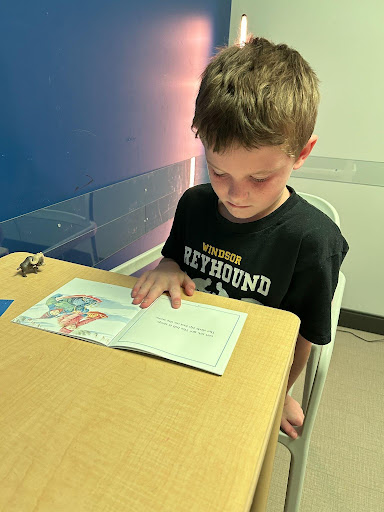
“The speech therapy team has provided feeding therapy for a number of our tongue-tied babies and dyslexia therapy for our dyslexic children,” Jocelyn said. “They have made great progress in school with the therapy they receive. Occupational therapy has helped my seven-year-old to regulate himself and to work on his fine motor skills. The mental health team provides children with a safe space to process their emotions and learn regulation skills.”
Speech therapist Anna Walley believes that the multidisciplinary atmosphere at TPP is especially beneficial for families with more than one child receiving services because it allows for coordinated, efficient care. “For example, speech-language and occupational therapists collaborate to align strategies—such as combining handwriting support with spelling or decoding tasks—so children receive consistent instruction across sessions,” she explained. “Families may also be given shared tools like visual schedules, structured homework routines, or multisensory learning strategies that can be used with multiple children.”
Occupational therapist Emily McKinzie agrees. “The multidisciplinary atmosphere and emphasis on family involvement is helpful because it creates a more supportive team with a wider viewpoint and multiple perspectives to support the family, and it allows for more buy-in and carryover between therapists and families,” she said. “Families are able to remain more involved and carry over things they have learned with other children and at home. Some families feel more comfortable asking different questions and discussing topics to ensure all their children’s needs are checked or met.”
As one of the therapists who works with the Bishop family, Anna has focused on providing the family with training and professional recommendations that equip them to support their children’s success at home. “Collaboration with the Bishop family has included regular communication and direct modeling of dyslexia-based strategies that can be used at home,” she said. “For example, we have worked with them on practicing decoding skills using multisensory techniques (e.g., tapping out sounds, writing letters in sand), reinforcing high-frequency word recognition, and building consistent reading routines.”
Emily has kept the family involved in occupational therapy progress by talking with them before or after each session, providing activities to work on at home, and holding occasional parent collaboration sessions to support the child’s progress in their home environment.
Jocelyn has experienced the challenges that come with parenting multiple children in need of therapy services, but she also understands the success that can be achieved by forming effective partnerships with therapy providers.
“I would recommend talking to your child’s therapists and working on a schedule that works for you,” she said. “They are very willing to help work it out so it’s easier for you to make it to all of the appointments. If you have questions or concerns the therapists are wonderful and willing to listen. My children look forward to spending time with their therapists each week.”
Questions or comments? Contact us