Talking to Make Up for Lost Time: A Look at Tate’s Progress in Speech Therapy
Written By: Amy Wolcott M.S., CCC-SLP
Imagine if no one could understand anything you said…
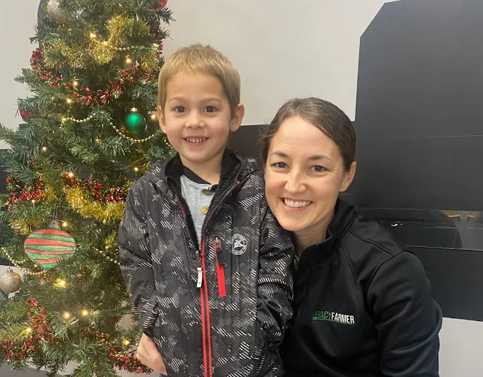
If you met Tate today, you’d see a bright 5-year-old who always has a story to share. But when Tate was 3 ½, his family could hardly understand anything he said.
His mom, Shana, recalls that when she first brought Tate to The Pediatric Place for a speech evaluation, a question on the paperwork asked if he could say 50 words.
“I thought maybe he had 20 but I finally started counting on my fingers,” she remembered. “I wasn’t sure that he even had 10 actual words.”
The words Tate did have were often unintelligible. “Occasionally, by accident it seemed, he would say a word right and we would try to help him say it again,” Shana said. “He could never repeat the word twice. ‘Dog’ devolved into ‘og,’ ‘ug’, or ‘duh’.”
Shana says that Tate used the word “adiyah” for nearly everything. Understandably, Tate was becoming increasingly frustrated and angry when he was not understood. Shana remembers following him through the house as he ran crying ahead of her, looking for an object to help him explain himself. Always a good-natured child, Tate began to have meltdowns when his communication attempts were unsuccessful.
At some point, Tate’s attempts to speak began to fade.
“He knew people weren’t going to understand him, so he would just evade a question by grinning and putting his thumb in his mouth,” Shana said. “With children his own age, he would take them by the arm and haul them off so he could show them something.”
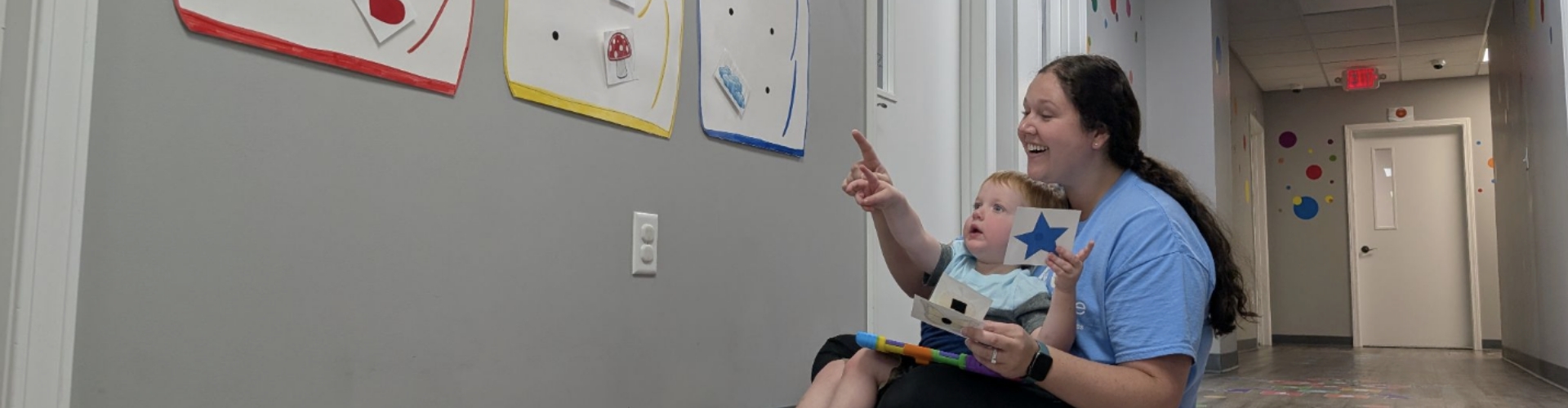
Tate started speech therapy at 3 ½, and little by little, this all began to change. Tate met with his speech therapist twice a week, and his family faithfully helped him practice the sounds he was targeting in therapy at home.
Making up for lost time…
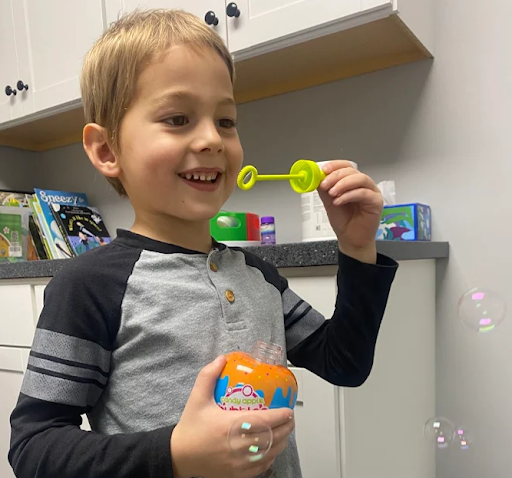
Tate is now 5 ½—and he’s still working hard in speech therapy—but the “adiyah” days are over. Most of his speech is now intelligible, and Tate always has something to say.
Shana says that Tate recently came to her and said, “I yike talking!” Tate has always loved to sing, and now he can say the words instead of just humming. He joins in conversations and often complains that his older siblings aren’t giving him a chance to talk. Shana says that one of the most rewarding things is watching him enjoy his friends and be one of the bunch.
While the years that Tate couldn’t fully participate in communication can’t be erased, he is making up for it by sharing the stories he was unable to share before.
“My husband and I always felt sad that we completely missed the funny talking stage of 2-3-year-olds with Tate, when they tell you all sorts of crazy things and try out words,” Shana said. “But now Tate tells us about things that happened before he could talk. ‘It was a long time ago,’ he always says.”
The therapy journey has been long, and it has required dedication and persistence on the part of Tate and his family. But Shana feels that all the time spent in therapy and home practice has paid off.
“Tate is actually talking!” she said. “He is a happy little guy who is looking forward to first grade. Tate has had four wonderful therapists so far, and we are deeply indebted to their skill. It is worth it!”
Are you concerned about your child’s speech or language development? Call us at Clinton (660-219-9176) or Knob Noster (660-219-9381) to schedule an evaluation today!
Questions or comments? Reply to this email!