
Occupational Therapy for Pediatric Care
Why pediatric occupational therapy may be the key to your child’s success
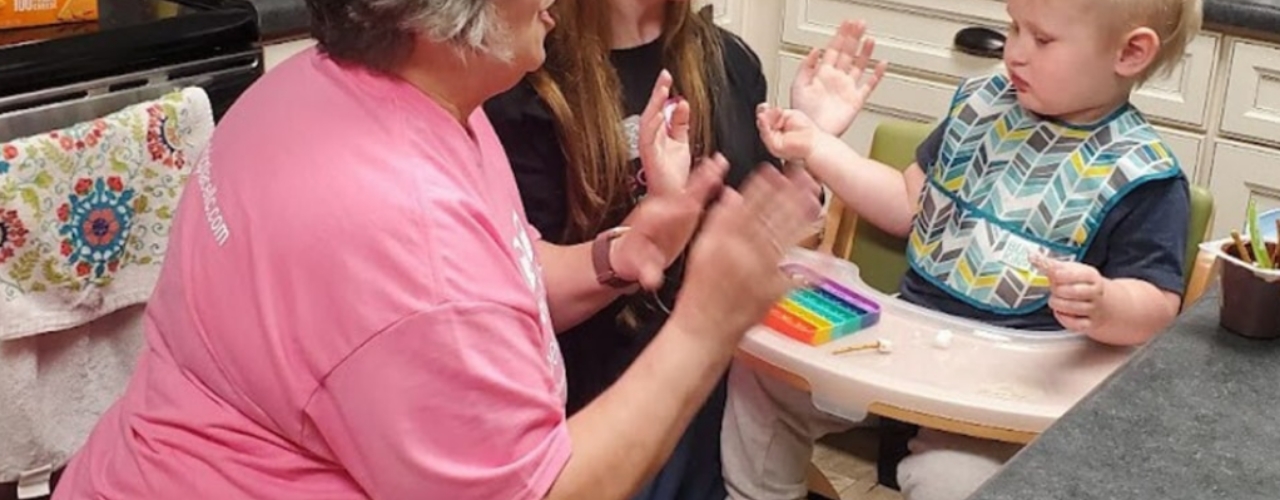
Our exceptional occupational therapists believe in promoting and encouraging growth, independence, and rehabilitation through the practice of everyday activities. Our approach considers the child’s entire body and how each aspect contributes to their overall functioning. We focus on fine motor skills, visual motor and perceptual skills, sensory processing, and self-care skills. We understand that every child is unique and has individual needs, and we tailor our treatment plans accordingly. Our goal is to provide valuable interventions that enable children to participate fully and independently with their peers in any environment, regardless of their abilities.
Pediatric occupational therapy is designed to address each child’s individual needs. Occupational therapy helps patients learn to execute self-care tasks, leisure activities, and responsibilities to live a productive life. Our highly skilled occupational therapists at The Pediatric Place in Clinton and Knob Noster, MO provide individualized treatment tailored to the child’s strengths, interests, and unique needs.
Wondering if pediatric occupational therapy is a good fit for your child? We can help! Call us to book an appointment at The Pediatric Place in Clinton or Knob Noster, MO today!
What Is Pediatric Occupational Therapy?
Pediatric occupational therapy is an effective way to help patients gain independence by improving visual skills, sensory-motor skills, and other functions required to perform in different settings. Occupational therapy aims to help children build functional ability in daily environments.
While physical therapy focuses on range of motion and physical functionality, OT helps children participate successfully in everyday life activities that are important, functional, and meaningful for their current developmental stage. Occupational therapy for children often incorporates executive functioning skills which is used for children with autism, cognitive disorders, and language disorders. If applicable to your child’s condition, occupational therapists will work with speech-language pathologists (SLP) to maximize progress during therapy.
Who Benefits From Occupational Therapy?
Children don’t require a medical condition to benefit from occupational therapy. OT can help kids overcome delays or difficulties so they can participate in home, school, and social environments. Children with the following conditions are often treated in occupational therapy:
- birth injuries/congenital disabilities
- sensory processing disorders
- brain or spinal cord injuries
- learning disorders
- autism
- Behavioral issues
- developmental delays
- post-surgical hand conditions
- spina bifida cerebral palsy
- chronic illnesses
- Down syndrome
Many of these conditions and their symptoms can cause a child to have issues with their self-esteem and personal connections. Fortunately, our therapists are here to support your family and guide your child through a progressive treatment plan. During your initial consultation at The Pediatric Place in Clinton and Knob Noster, MO, our pediatric OTs will assess your child’s condition, behaviors, and limitations that they display. We will observe how your child functions in normal settings and design a plan with corrective measures in order to enhance your child’s life. Our wide range of services is tailored to support your child’s physical, emotional, and developmental needs:
- Fine Motor Development
- Self Regulation
- Visual Motor
- Self Care, Life Skills, Community Safety
- Coping Skills
- Perceptual Skills
- Sensory Processing
What Can Be Accomplished Through OT?
Occupational therapists can help children in a number of ways, including:
- Improving fine motor skills: Cutting paper, handwriting, opening a lunchbox, grasping toys
- Improving hand-eye coordination: Throwing a ball, copying from a whiteboard, playing an instrument while reading music
- Learning self care tasks: Bathing, getting dressed, brushing teeth
- Emotional regulation during daily routines/activities: safety/impulse control skills, self advocacy, navigating emotions and sensory needs in social/community settings
- Learning to use specialized equipment: Wheelchairs, splints, crutches, communication aids, etc.
- Improving attention and social skills
Our pediatric occupational therapists at The Pediatric Place help children build confidence and success in self-care, school, recreational activities, and community participation.
What to Expect During Sessions at The Pediatric Place
Our occupational therapy programs help children build developmental skills in a safe, fun, and comfortable way. Our therapists at The Pediatric Place in Clinton and Knob Noster, MO can teach your child how to perform daily tasks, including dressing and eating, drawing, writing, and playing with friends.
During treatment, your child’s OT will develop goals to support areas of need, assess your child’s developmental and learning needs, implement appropriate activities to help meet a child’s goal, and make environmental changes if necessary. We will begin with a comprehensive assessment of your child and their needs. We know that each child is unique in their own way, which is why we customize treatment plans to ensure our patients have the best chance of success. It’s important that we understand your child’s daily environments, such as school, hobbies, recreational activities, and home life. This way, we can tailor exercises and developmental strategies to fit your child’s lifestyle.
Book an Appointment Today!
Our team at The Pediatric Place in Clinton and Knob Noster, MO is committed to helping your child find the relief they need. Through effective exercises and evidence-based techniques, we can help your child improve their quality of life by strengthening their relationships and developing their independence.
FAQs
What Is Pediatric Occupational Therapy?
Pediatric occupational therapy focuses on helping children develop the skills they need to function effectively in their daily lives. It specifically assists children to grow physically, cognitively, socially, and emotionally.
Pediatric occupational therapy aims to enable children to participate in everyday activities or “occupations.” These occupations often include self-care routines like dressing, eating, bathing, and grooming. It also covers school-related tasks like handwriting, typing, and organizational skills.
Furthermore, social and play activities that involve motor coordination, like riding a bike, playing games, or using toys, are also considered under pediatric occupational therapy.
Our therapists work with children who have various needs. Some children may have physical disabilities that affect their motor skills. Others might have cognitive or sensory processing difficulties affecting their ability to perform everyday tasks.
Our pediatric occupational therapists use a variety of methods to facilitate development and overcome challenges. The specific techniques and approaches the therapist uses will depend on the child’s needs.
What Does a Pediatric Occupational Therapist do?
Pediatric occupational therapists assist children in developing the skills necessary for daily living and playing. They focus on fine motor skills, sensory processing, and self-care activities. Children who benefit from occupational therapy may have conditions such as autism, sensory processing disorders, developmental delays, or physical disabilities. Key areas of focus include:
Fine Motor Skills:
- Improving hand-eye coordination and the ability to manipulate small objects, which is crucial for tasks like writing, drawing, and using utensils.
Sensory Integration:
- Helping children process and respond appropriately to sensory information from their environment, including touch, sound, and movement.
Daily Living Skills:
- Teaching children how to perform everyday tasks such as dressing, grooming, feeding, and hygiene.
Adaptive Strategies:
- Providing tools and techniques to help children overcome challenges and become more independent in their daily routines.
How Can I Tell if My Child Needs Occupational Therapy?
The need for occupational therapy might not always be apparent, as signs can vary greatly depending on the nature of a child’s specific difficulties. However, here are some common signs that your child might benefit from occupational therapy:
- Delayed Milestones: Your child is not reaching developmental milestones at the expected time (such as sitting, crawling, walking, or talking).
- Difficulty with Fine Motor Skills: They need help with tasks that require precise movements, like using utensils, doing up buttons, holding a pencil, or doing puzzles.
- Difficulty with Gross Motor Skills: They struggle with activities that require whole-body movement, balance, and coordination, like jumping, running, or climbing stairs.
- Sensory Issues: They’re overly sensitive or under-responsive to sensory stimuli such as light, sound, touch, or certain textures in food.
- Difficulty with Self-Care Tasks: They need help dressing, feeding themselves, brushing their teeth, or using the bathroom independently.
- Trouble with Focus and Attention: They have difficulty staying focused on a task or activity for an age-appropriate amount of time or struggle to pay attention in a busy environment like a classroom.
- Difficulty with Social Interactions: They have difficulty making friends, interpreting social cues, or seem to be uninterested in playing with other children.
- Academic Struggles: They find handwriting, reading, or other school-related tasks challenging.
- Behavioral Problems: They often have temper tantrums, seem overly active, or have difficulty adjusting to new situations.
Please note that these signs alone do not diagnose occupational therapy needs. They are potential indicators, and if you notice them consistently, it would be a good idea to consult a professional for further assessment.
The most common conditions our pediatric occupational therapists often treat, include the following
- Autism Spectrum Disorder (ASD)
- Attention Deficit Hyperactivity Disorder (ADHD)
- Cerebral Palsy and Down Syndrome
- Sensory Processing Disorder
- Developmental Delays
- Learning Disabilities
- Spina Bifida, Muscular Dystrophy or Juvenile Rheumatoid Arthritis
- Genetic Disorders
- Prematurity
- Visual and/or Hearing Impairment
- Fine and Gross Motor Delays
If you are concerned about your child don’t hesitate to contact The Pediatric Place and let us help you find the answers you’re looking for!
What to Expect at Your Child’s Pediatric Occupational Therapy Session?
Occupational therapy (OT) for children is designed to assist them in developing or improving essential skills for daily life, such as fine motor skills, gross motor skills, sensory processing skills, self-care tasks, and social skills. It benefits children with physical, sensory, or cognitive issues that affect their function and independence. Here’s what you can generally expect from a pediatric occupational therapy session:
The first session often starts with a comprehensive evaluation. Our therapist will evaluate your child’s skills and abilities through various standardized tests, observations, and parent reports. They will try to understand your child’s strengths and weaknesses regarding their development, sensory processing, motor skills, self-care abilities, social skills, and any other relevant areas.
Once the assessment is complete, your occupational therapist will work with you and your child to set realistic and achievable goals. These goals could be about improving fine motor skills (like buttoning a shirt or holding a pencil), gross motor skills (like balance or coordination), sensory processing, or social-emotional skills, depending on your child’s needs.
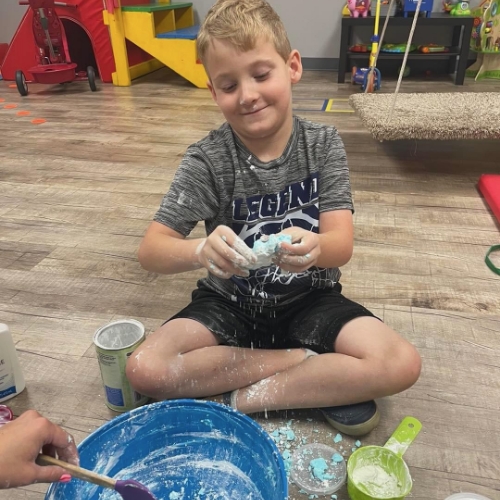
Therapy sessions usually involve various play-based activities to help your child develop or improve specific skills. These activities vary widely, from puzzles and games to improve fine motor skills and problem-solving to physical exercises for improving strength and coordination or sensory activities like playing with different textures or sounds. Occupational therapy often looks like play because play is the primary “job” of a child, and it’s the best way they learn.
Depending on the therapist and the age/needs of the child, parents might be invited to be part of the session, especially toward the end. Home practice is also an essential part of therapy and helps to reinforce the skills learned in therapy sessions.
Remember, every child is unique, and thus, their therapy will be tailored to their specific needs and interests.
Why isn’t my child able to perform simple motor tasks?
As children age, their motor skills begin to develop so they can perform more intricate tasks, such as picking up a spoon and feeding themselves. There are literally hundreds of reasons why some children aren’t able to perform motor skills at a young age. Often, the problem is simply a type of developmental delay, meaning something caused the child to develop his or her senses a little slower than others. Many times they grow out of it and other times therapy will help them through it.
How does pediatric occupational therapy help my child?
Occupational therapy is a proven way to help children develop their motor skills and sensory awareness. Our certified speech, occupational, and physical therapists work together with you and your child to help him/her develop those skills through activities and exercises. We’ve developed these activities through years of experience and research, but for your child, therapy will just feel like playing. Many children who complete occupational therapy see improvement in motor function.
Your Next Steps…
Request An Appointment
Meet Our Multidisciplinary Team
Receive a Seamless Treatment Plan
Start to See Success and Growth!